Top Resume and LinkedIn Tips to Get Noticed by Hiring Managers in 2026
There’s a silent mistake most job seekers make.
They enter the job market in defensive mode.
They try to look safe.
Safe language.
Safe formatting.
Safe claims.
They aim to be acceptable.
But here’s the truth no one tells you:
The job market does not reward safe.
It rewards signal.
And signal comes from being special.
The Resume Is Not a Document. It’s a Decision Trigger.
Most people think a resume is a summary of their past.
It isn’t.
It’s a psychological trigger.
In 6–8 seconds, a hiring manager decides:
- “Worth my time.”
- Or “Next.”
That’s it.
And in a world shaped by platforms like LinkedIn, you’re not just competing against applicants.
You’re competing against visibility, positioning, and perception.
So let’s break the illusions.
1. Years Don’t Impress. Proof Does.
“I have 20 years of experience in project management.”
Pause.
Twenty years of what?
Growth? Stagnation? Repetition?
Time is neutral.
Impact is powerful.
Instead of leading with years, lead with change:
- Scaled operations across 4 regions.
- Reduced overhead by $1.2M.
- Increased client retention from 68% to 91%.
Years tell us you existed.
Results tell us you mattered.
2. Metrics Are Not Decoration. They Are Evidence.
Poll after poll shows something powerful: people respond to numbers.
When professionals were asked whether resumes should include metrics, the majority said yes.
Why?
Because numbers end arguments.
“Improved sales.”
vs.
“Increased quarterly sales by 37% in 9 months.”
One is noise.
The other is proof.
Metrics don’t make you arrogant.
They make you credible.
And credibility creates curiosity.
3. General Is Invisible.
Strong communicator.
Hardworking.
Team player.
Results-driven.
These words feel safe.
They are also forgettable.
There are thousands of “hardworking team players.”
But there are very few professionals who:
- Led a 14-member cross-border team.
- Built SOPs that reduced error rates by 43%.
- Negotiated vendor contracts saving $380K annually.
Specificity creates identity.
Identity creates memory.
Memory creates interviews.

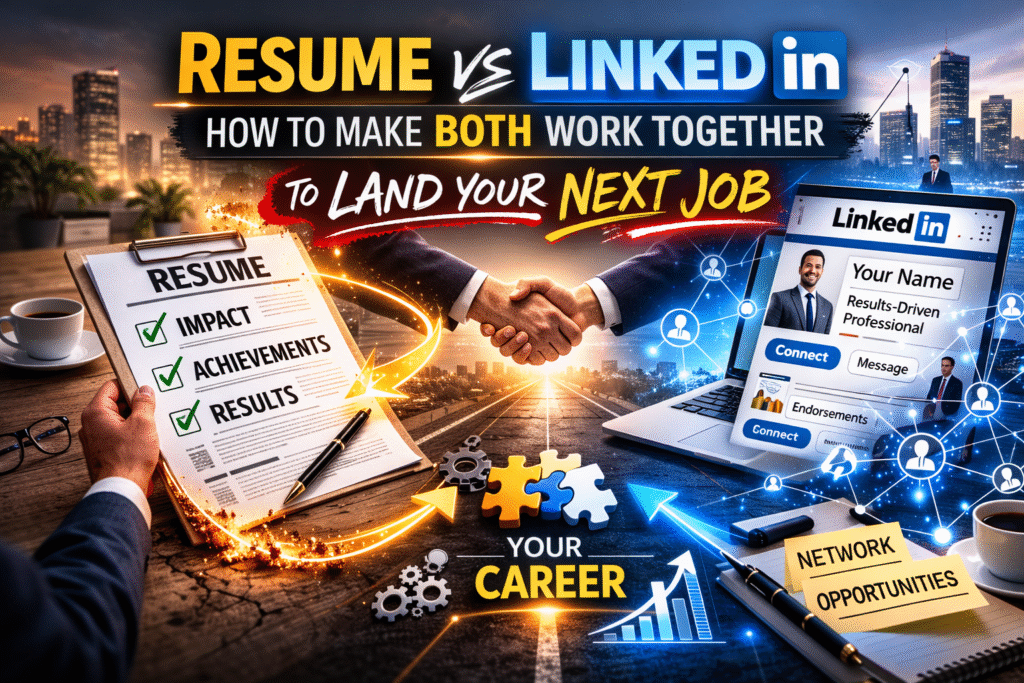
4. The Resume vs. The LinkedIn Illusion
When thousands of professionals were asked to choose between keeping their resume or their LinkedIn profile — LinkedIn won by a landslide.
Why?
Because your resume is static.
Your LinkedIn profile is alive.
A resume is tailored.
LinkedIn is discoverable.
A resume answers, “Why you?”
LinkedIn answers, “Who are you?”
Together, they create positioning.
Separately, they create limitation.
5. The Summary Section: Dead or Powerful?
Some say the Summary is outdated.
Others defend it fiercely.
Here’s the truth:
A weak summary is dead.
A sharp one is magnetic.
Not:
“Experienced professional seeking opportunities…”
But:
“Operations leader who transformed a failing distribution model into a 12-state network, cutting delivery time by 24% and boosting customer satisfaction to 96%.”
That doesn’t introduce you.
It positions you.
6. Resume Length Is Not About Pages. It’s About Relevance.
One page? Two pages? Three?
The real question is:
Does every line earn its place?
Seven-page resumes don’t signal importance.
They signal lack of clarity.
Decluttering is courage.
Remove:
- Outdated tools.
- Irrelevant roles.
- Buzzwords without proof.
- High school details (if you’re mid-career).
Clarity is respect for the reader’s time.
7. Bold Text Is Strategy, Not Style
Highlight metrics.
Highlight job titles.
Highlight transformation.
But don’t bold everything.
If everything screams, nothing stands out.
Think of bold text like emphasis in speech.
Strategic pauses make people lean in.
8. A Resume Alone Will Not Save You
This might sting.
A resume cannot guarantee you a job.
It cannot replace:
- Networking
- Interview presence
- Follow-ups
- Consistency
There are no guarantees in job search. Only leverage.
Your resume is leverage.
Your LinkedIn presence is leverage.
Your conversations are leverage.
Together, they compound.
9. The Words That Quietly Kill Credibility
There are words that should go extinct:
- Go-getter
- Passionate
- Detail-oriented
- Self-starter
- Results-driven (without showing results)
If you’re detail-oriented, show zero typos.
If you’re results-driven, show numbers.
Claims without evidence are whispers.
10. Stop Playing Defense.
This is where everything changes.
Most candidates try to:
- Avoid looking arrogant.
- Avoid standing out too much.
- Avoid being “too bold.”
So they soften their impact.
And disappear.
But here’s the deeper truth:
Being clear about your value is not arrogance.
It is leadership.
When you communicate your impact precisely, you:
- Make the hiring manager’s job easier.
- Shorten their decision time.
- Increase your perceived confidence.
The job market is crowded with general profiles trying not to offend.
Be the one who knows exactly what they bring.
The Real Shift
Don’t try to be qualified.
Try to be unmistakable.
Qualified candidates list responsibilities.
Unmistakable candidates reveal outcomes.
Qualified candidates hope.
Unmistakable candidates position.
Qualified candidates defend their history.
Unmistakable candidates declare their impact.
Your resume is not a historical archive.
It is a strategic signal.
And the moment you stop trying to be acceptable…
…is the moment you become unforgettable.
